What Does a Forensic Animator Do? How 3D Animation Is Used in Court
When a jury needs to understand how a car crash unfolded at 60 miles per hour, or how a surgical error caused permanent nerve damage, a written report rarely does the job. That's where forensic animators come in. These specialists reconstruct events — crimes, accidents, medical procedures, workplace incidents — using scientifically grounded 3D animation. The result is courtroom-ready visual evidence that can make or break a case.
The role of the forensic animator sits at the intersection of technical artistry, forensic science, and legal communication. As courts have grown more receptive to computer-generated evidence, demand for this work has increased steadily — and the standards for accuracy have never been higher.
What a Forensic Animator Actually Does
A forensic animator's core task is reconstruction: taking a disputed or complex event and building a precise visual account of it from available evidence. That evidence might include police reports, accident scene photographs, GPS data, black-box vehicle recordings, medical records, deposition transcripts, and testimony from expert witnesses including engineers, physicians, and biomechanics specialists.
The process typically begins with data collection and close collaboration with those experts. The animator doesn't invent a narrative — they translate one from the record. A senior animator at a litigation support firm might spend as much time on the phone with an accident reconstruction engineer as they do in front of their workstation.
From there, the work becomes technical: building 3D models of environments, vehicles, and human bodies; applying accurate physics to simulate motion and impact; and rendering the final sequence in a format that can be presented to a judge and jury. Many projects start with a laser scan of the actual location, which provides the spatial data needed to build a photorealistic digital environment.
The final deliverable isn't just a video file. It's a defensible visual record that must hold up under cross-examination. Opposing counsel will challenge the assumptions behind every keyframe.
Types of Cases That Use Forensic Animations
Forensic animations appear in a wide range of civil and criminal proceedings. Vehicle collision reconstruction is the most common application — animating a crash from multiple camera angles to establish fault, speed, and point of impact. These reconstructions are often built around data extracted from the vehicles' event data recorders and corroborated by physical evidence at the scene.
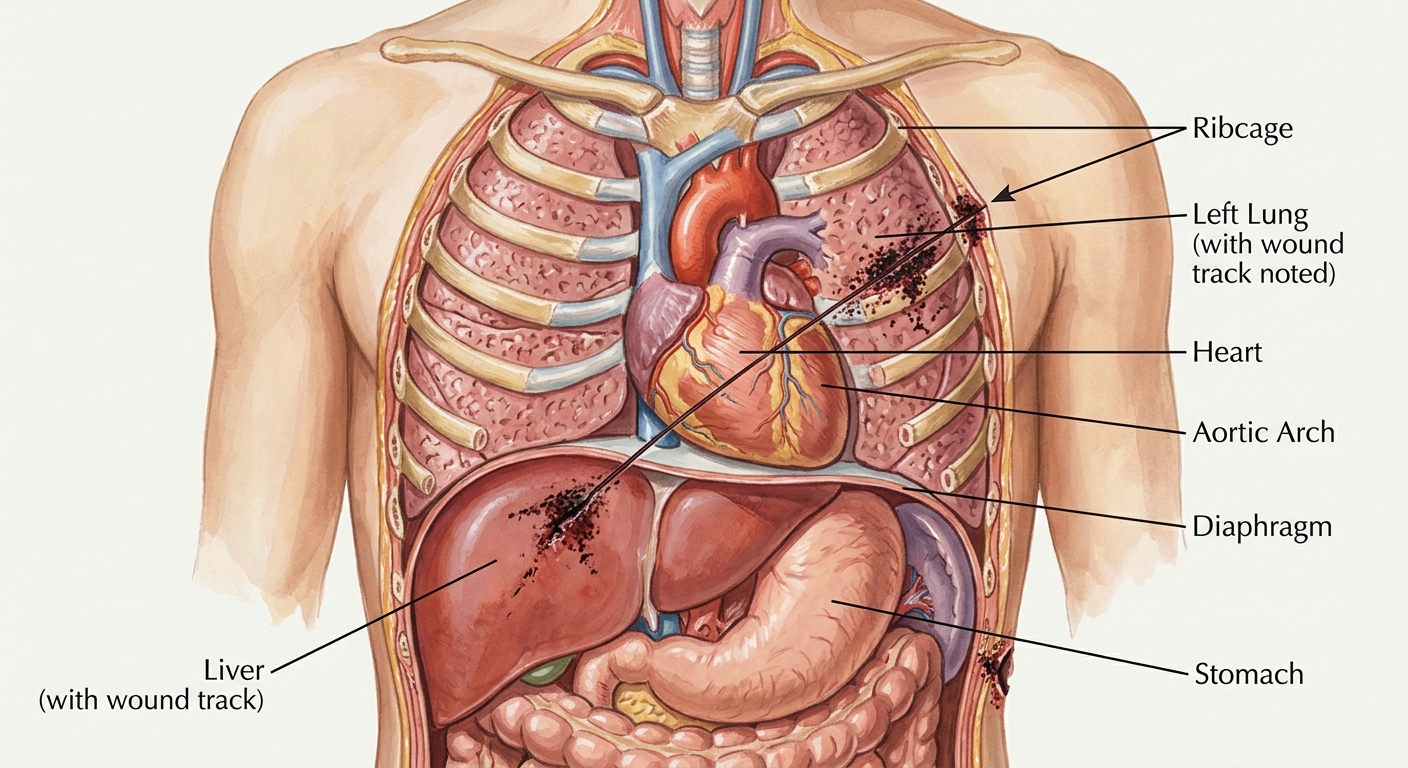
Medical malpractice and personal injury cases represent the second major category. Here, the animation explains what happened inside a patient's body: a surgical instrument advancing too far, an arterial nick, a spinal injury from an improperly performed procedure. This work demands a deep understanding of anatomy and biomechanics. The animator must render a human body with enough anatomical accuracy that a plaintiff's medical expert can point to the screen and say "this is what the imaging shows."
Criminal cases — homicides, assaults, firearms incidents — use forensic animations to reconstruct timelines and trajectories. Prosecutors have used 3D animation to illustrate how a bullet traveled through a room, or to synchronize surveillance footage with a suspect's claimed movements. Defense teams use the same techniques to challenge those narratives.
Industrial accidents, product liability, wrongful death, and drug conspiracy prosecutions have all seen forensic animation admitted as evidence. The tobacco litigation against Philip Morris — which resulted in a $173 billion verdict — included animated evidence explaining how nicotine levels were engineered to maximize addiction.
Admissibility: How Forensic Animations Get Into the Courtroom
A forensic animation doesn't walk into court automatically. It is typically admitted as demonstrative evidence, meaning it must support and accurately represent an expert witness's testimony rather than stand alone as independent proof. The animation must clear the same admissibility bar as any other technical exhibit.
In federal courts and most state courts, that bar is set by the Daubert standard, established in Daubert v. Merrell Dow Pharmaceuticals (1993). Under Daubert, the trial judge acts as a gatekeeper and evaluates whether the scientific methodology underlying the evidence is reliable and relevant. For a forensic animation, this means demonstrating that the physics engine used, the data inputs, and the expert assumptions are all sound and defensible.
Several states — including California, New York, and Illinois — still apply the older Frye standard, which asks whether the technique has achieved "general acceptance" in the relevant scientific community. Either way, forensic animators who want their work admitted must document every assumption, be transparent about error rates, and be prepared to have their methodology challenged in a Daubert hearing.
The practical implication: forensic animators must work like scientists, not just visual storytellers. Everything has to be traceable back to evidence.
The Skills and Background Behind the Work
Forensic animation is a genuinely interdisciplinary field. Most practitioners hold a bachelor's degree in animation, computer graphics, or a related field, but many employers prefer candidates who also carry coursework or secondary credentials in criminal justice, physics, engineering, or the life sciences. Some forensic animators come from a medical illustration background; others transition from visual effects or architectural visualization.
Software fluency is expected at a high level. Autodesk 3ds Max and Blender are common tools for 3D modeling and animation. CAD software is used to build accurate environmental models. Physics simulation engines ensure that objects in the animation behave consistently with real-world mechanics. Compositing tools like Adobe After Effects are used in post-production to assemble final presentations.
The salary range reflects the specialization involved. Forensic animators in the United States earn between $73,000 and $137,000 annually in staff positions, according to aggregated data from career platforms, with senior or independently contracted specialists reaching $200,000 or more. The work is concentrated in litigation support firms, accident reconstruction companies, and medical visualization studios, though solo practitioners do exist.
What separates a competent forensic animator from an excellent one is usually less about software and more about judgment: knowing when a visual choice might overstate a claim, when a camera angle could unduly influence a jury, and how to represent uncertainty honestly.
Where Medical Illustration Meets Forensic Animation
Not every forensic case involves vehicles or crime scenes. A growing share of forensic work centers on the human body — injuries, surgeries, anatomical structures, the mechanisms by which trauma causes damage. This is where medical illustration and forensic animation intersect most directly.
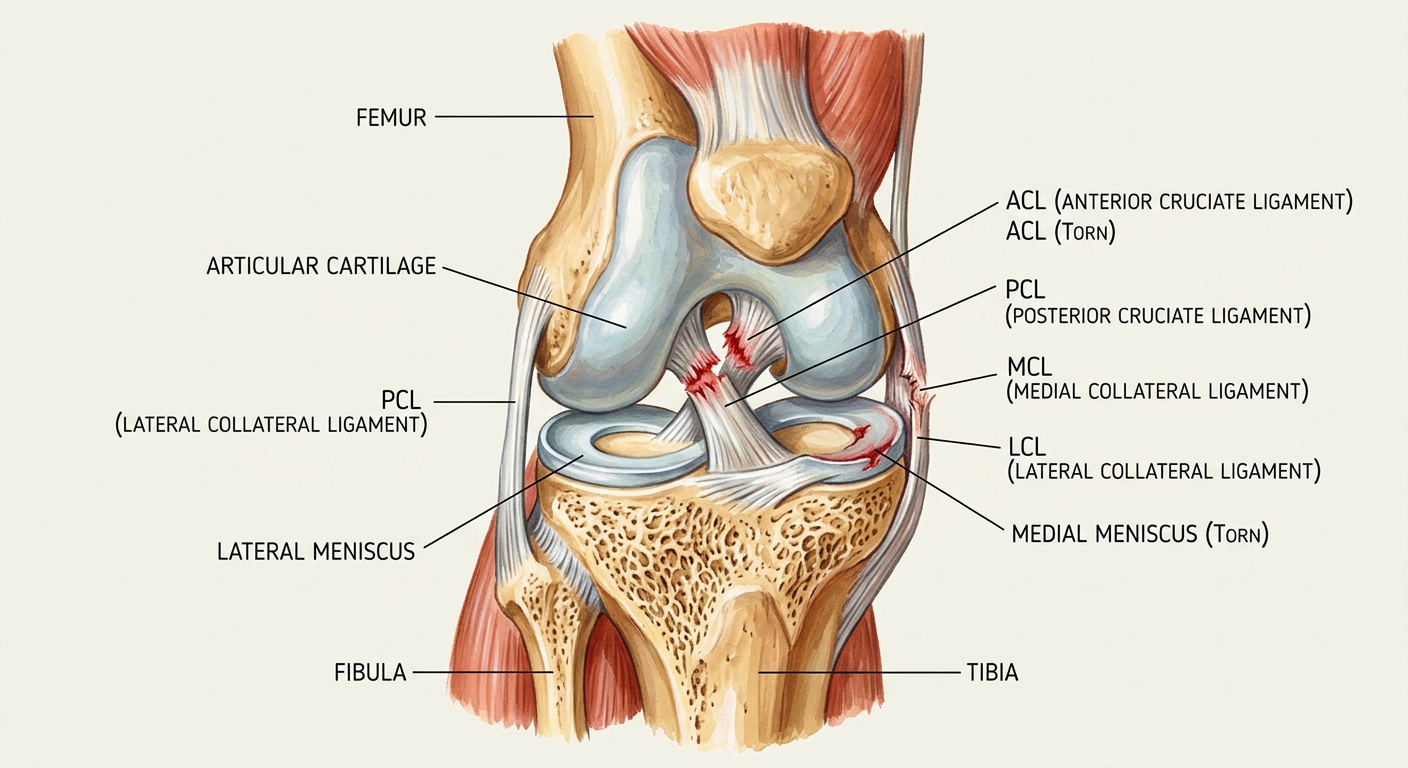
In a medical malpractice case, an animation might show how a nerve is positioned relative to the surgical field, and how the alleged error brought an instrument too close to it. In a personal injury case, an animation might walk the jury through the biomechanics of a whiplash injury — how the cervical spine moves during a rear-end collision, and which soft tissue structures absorb force at each stage.
Creating that kind of animation requires source material: accurate, clinically grounded depictions of anatomical structures. Historically, this meant commissioning custom medical illustrations or licensing stock images and hoping they were accurate enough for courtroom use. AI-assisted medical illustration platforms like Natomy AI are changing that calculus. By transforming clinical photographs and medical imaging into professional anatomical illustrations, tools like Natomy can dramatically accelerate the image preparation phase of forensic medical animation — giving animators accurate, case-specific visual assets that hold up to expert scrutiny.
The Future of Forensic Animation
Courts are becoming increasingly comfortable with digital evidence, and the technology behind forensic animation is evolving quickly. Real-time 3D engines — the same platforms used in game development — are beginning to appear in litigation workflows, allowing animations to be rendered interactively rather than pre-rendered to a fixed sequence. Virtual reality is being explored as a way to let jurors experience a reconstructed scene rather than simply observe it.
At the same time, the evidentiary stakes are rising. As animations become more photorealistic, the risk of unduly influencing a jury increases. Courts are paying closer attention to the line between "this is what the evidence shows" and "this is what we believe happened." The forensic animator's responsibility isn't just technical — it's epistemic. The work has to be as honest as it is persuasive.
If your legal or medical practice needs high-quality anatomical illustrations for litigation support, expert witness preparation, or patient education, Natomy AI can help. Upload a clinical photo and receive a professional-grade anatomical illustration in minutes — built to the standards that courtrooms and medical journals demand.
Ready to create your own medical illustrations?
Upload a clinical photo and generate a professional illustration in seconds.
Try for Free →