Urology Marketing: Strategies to Grow Your Practice in 2026
Most urology practices are leaving patients on the table — not because their clinical outcomes are poor, but because their marketing hasn't caught up with how patients actually find care. A patient struggling with kidney stones, BPH, or erectile dysfunction is not going to ask their neighbor for a recommendation. They're opening Google at 10pm and searching in private. If your practice doesn't show up, a competitor does.
The urology market is growing fast — projected to reach $139.85 billion globally by 2032, expanding at an 11.74% annual rate. That growth means more patients seeking care, but also more competition for their attention. The practices that win are those that understand the modern patient journey: search-driven, review-influenced, and increasingly sensitive to how providers communicate about conditions that carry real social stigma.
This guide covers the essential urology marketing strategies to attract more patients, diversify beyond physician referrals, and build a practice that grows sustainably in 2026 and beyond.
The Referral Trap and Why Urology Practices Need to Break Out
For decades, urology has been a referral-driven specialty. A patient sees their primary care physician for a urinary complaint, gets sent to a urologist, and the practice grows through the quality of those relationships with referring providers. That model still works — but relying on it exclusively is a strategic liability.
Physician referrals are outside your direct control. Referral patterns shift when PCPs change practices, when hospital systems negotiate preferred provider agreements, or when patients switch insurance plans. A practice built entirely on referrals has no direct relationship with the patients themselves.
The more pressing issue is that elective and semi-elective urological procedures — vasectomies, treatment for BPH, management of erectile dysfunction, kidney stone workups — are increasingly driven by patients who initiate their own search for care. These patients start with Google, not a doctor's office. They read reviews, compare providers, and often book appointments before mentioning anything to their PCP.
Urology marketing means building a system that captures these self-referring patients while maintaining strong referral relationships. The goal isn't to replace one with the other — it's to stop leaving one revenue stream entirely on the floor.
How Patients Actually Find Urologists Today
Understanding patient search behavior is the foundation of any effective urology marketing strategy. Research consistently shows that 84% of patients consult review websites before choosing a healthcare provider. They start with broad searches — "urologist near me," "best urologist for kidney stones [City]," "no-scalpel vasectomy" — and almost never look past the first page of results.
The searches are also increasingly specific and conversational. Patients aren't just typing "urologist." They're asking "what are the symptoms of overactive bladder?" or "how long is recovery from a vasectomy?" This shift toward question-based queries reflects both how people actually think about health concerns and the rise of voice search. A urology practice that publishes authoritative answers to these questions captures patients at the moment they're actively seeking help.
One important nuance: urological conditions carry more stigma than most specialties. Patients dealing with incontinence, erectile dysfunction, or STI-related issues are often reluctant to discuss their concerns openly — even with a doctor. They do their research in private, online, before committing to an appointment. This means your digital presence needs to feel safe and informative, not clinical and cold. The practices that break through hesitation are the ones whose content treats patients as intelligent adults navigating something difficult.
The Five Pillars of Effective Urology Marketing
Local SEO and organic search should be the first investment for most urology practices. When someone searches "urologist near me" or "kidney stone specialist [City]," Google surfaces a combination of paid results, the local map pack, and organic listings. Practices that claim and fully optimize their Google Business Profile — including photos, hours, services, and active review management — see significant traffic from that map pack without spending a dollar on ads.
Beyond Google Business Profile, condition-specific content drives organic search traffic. Pages dedicated to BPH treatment options, vasectomy procedures, or erectile dysfunction care rank for long-tail searches with high intent and relatively low competition. These pages also build trust before a patient ever picks up the phone.
Google Ads and paid search offer faster results for practices that need near-term patient volume. Healthcare ads average a click-through rate of around 6%, with a conversion rate near 4.6% — meaning roughly 1 in 20 people who click will call or book. At an average healthcare cost per click of $2.62, paid search can be cost-effective, particularly for high-value procedures. The key is targeting high-intent keywords rather than broad terms. "Vasectomy consultation [City]" will convert far better than "men's health."
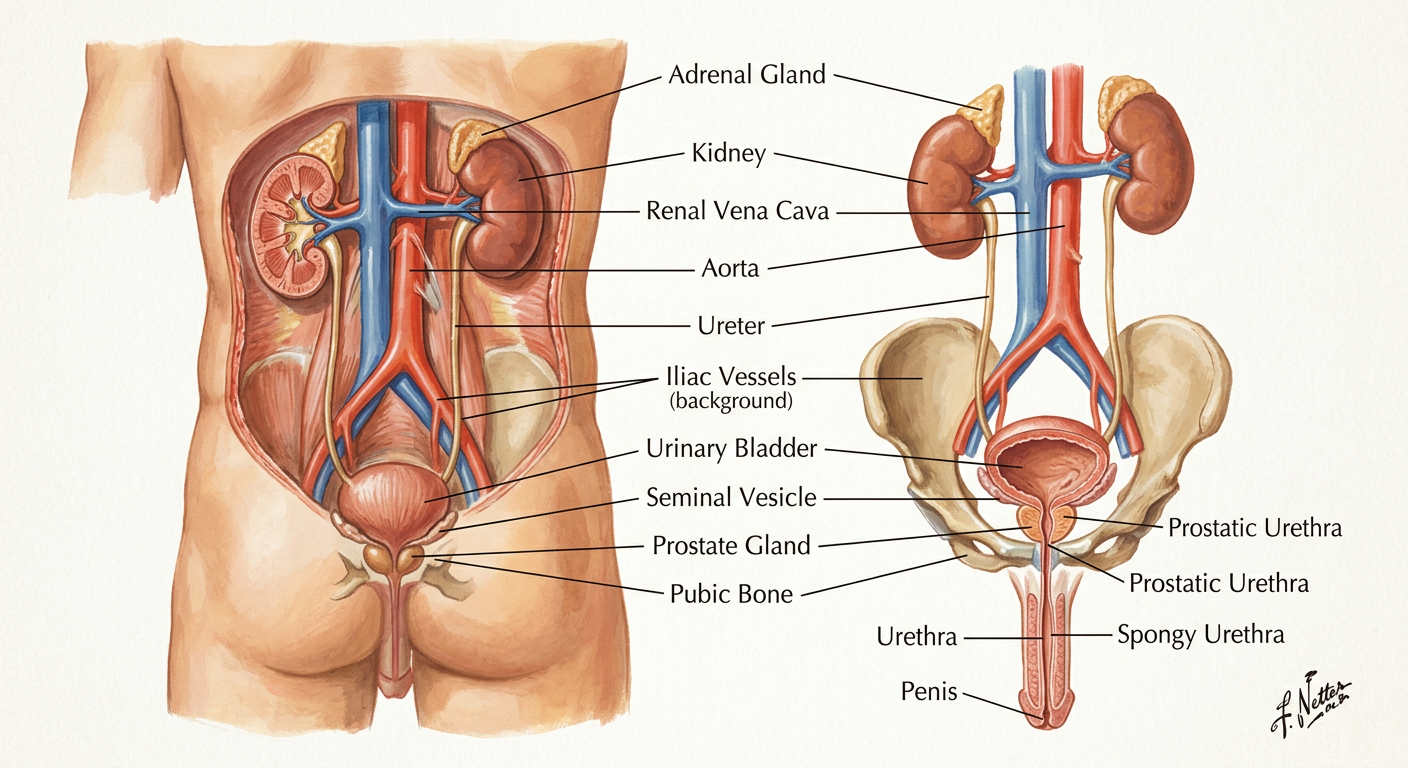
Content marketing is the long game that compounds over time. Blog posts answering common patient questions — how to prepare for a cystoscopy, what causes frequent urination, whether BPH requires surgery — establish your practice as a credible resource. When a patient has been reading your content for two weeks before calling, they arrive with trust already built. Visual content is particularly valuable in urology, where explaining procedures through clear anatomical diagrams helps patients understand what to expect and reduces pre-appointment anxiety.
Online reputation management may be the single highest-leverage activity for a urology practice. Research shows that patient ratings improve measurably once a practice accumulates 21 or more reviews — a specific threshold where the volume of positive feedback begins to statistically outweigh the inevitable negative outliers. The most common complaints in negative urology reviews are long wait times, minimal provider interaction, and billing confusion — none of which are clinical. They're operational and communication problems, which means they're fixable. Practices should systematize review requests post-appointment and respond professionally to all reviews, positive and negative. Eighty-nine percent of patients expect businesses to respond to reviews; those that don't are signaling indifference.
Telemedicine has shifted from a pandemic workaround to a genuine patient acquisition tool. A survey found that 87% of urologists plan to integrate AI and telemedicine into their practices within three years. For patients in the early stages of a urological concern — particularly men with ED or lower urinary tract symptoms who are reluctant to come in — offering an initial telehealth consultation dramatically lowers the barrier to entry. That first virtual appointment often converts to in-person care once a relationship is established.
Visual Communication as a Competitive Advantage
Urology is a specialty where patient education is directly tied to case acceptance. A patient who understands what BPH is, why their symptoms are occurring, and what a TURP procedure involves is far more likely to move forward with treatment than one who leaves a consultation with unanswered questions.
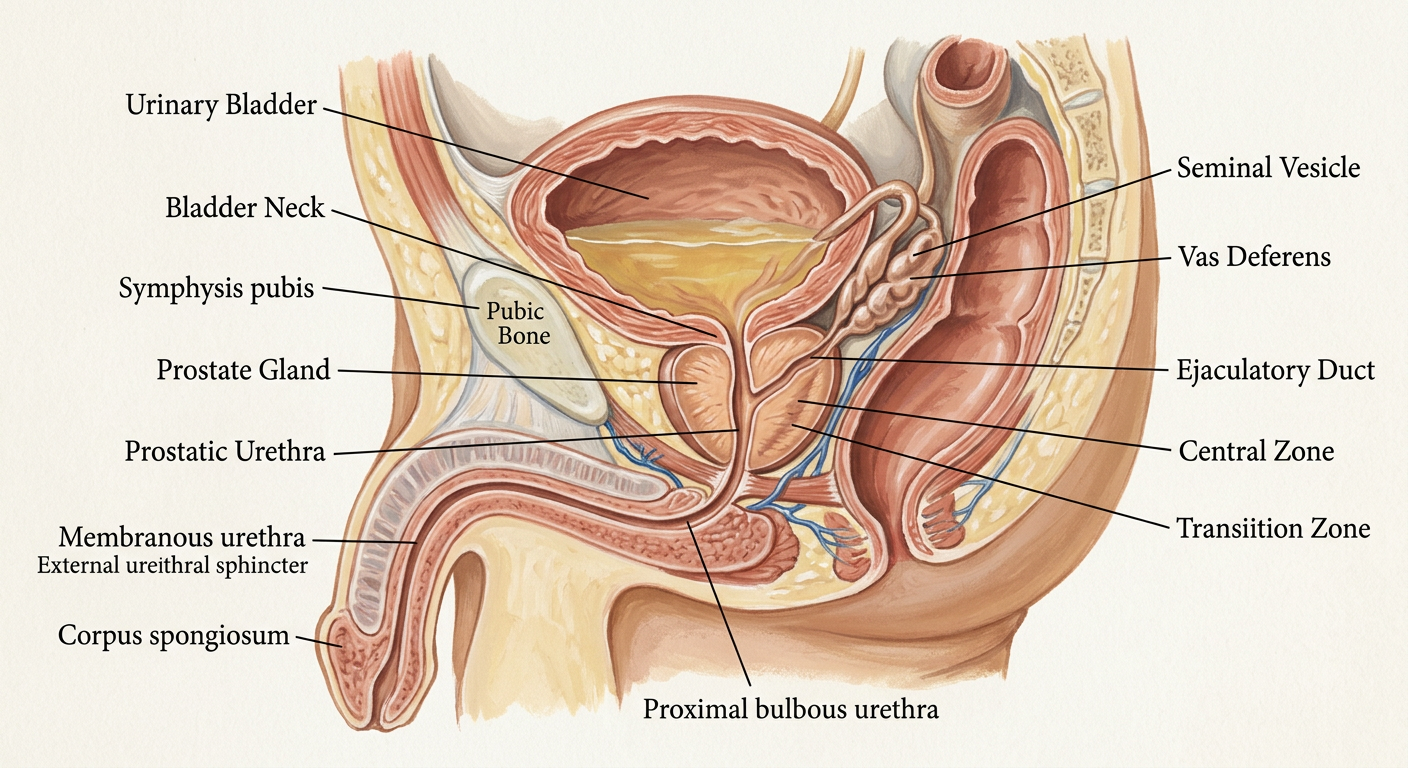
Most urology practices rely on generic stock images or outdated anatomical charts that feel clinical rather than informative. High-quality medical illustrations — the kind that explain procedure steps clearly, show anatomical structures in context, and translate complex pathology into something a patient can grasp in 30 seconds — are both a marketing asset and a patient care improvement.
Tools like Natomy AI allow urology practices to generate professional anatomical illustrations from clinical photos and descriptions, without needing a medical illustrator on staff. The result is patient-facing content that communicates expertise visually: website pages, pre-procedure handouts, social media educational posts, and email campaigns that actually show patients what their provider knows.
Building a Sustainable Patient Acquisition System
The most effective urology marketing programs don't treat each channel in isolation. They build a system where different touchpoints work together: a patient sees your blog post when researching symptoms, finds your practice in the Google map pack when they decide to look for care, reads 30+ positive reviews that confirm your credibility, and gets a confirmation email with a visual explainer of their upcoming procedure.
That system doesn't require a large marketing budget. It requires clarity about who you're trying to reach, consistency in creating useful content, and discipline in managing your digital reputation. Local SEO and content compound over time. Reviews accumulate. Telemedicine opens geographic market access that in-person-only practices can't reach.
The practices that will define urology care in the next five years aren't necessarily the ones with the best equipment or the most subspecialty expertise. They're the ones that communicate that expertise in ways patients can understand and trust — starting with the first Google search, long before the first appointment.
If you're creating patient education materials, procedure explanations, or website content for a urology practice, Natomy AI helps you generate professional anatomical illustrations quickly — without the cost or timeline of traditional medical illustration. Turn complex anatomy into clear, trustworthy visuals your patients will actually understand.
Ready to create your own medical illustrations?
Upload a clinical photo and generate a professional illustration in seconds.
Try for Free →